Why Tile Glue is Better Than Cement for Tiling

Many homeowners in Trivandrum still ask one common question:

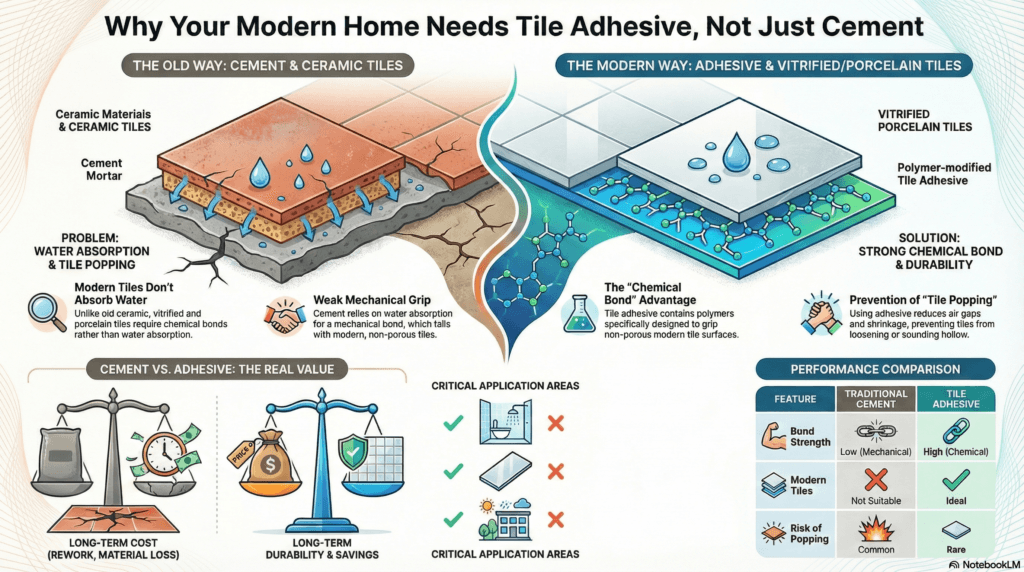
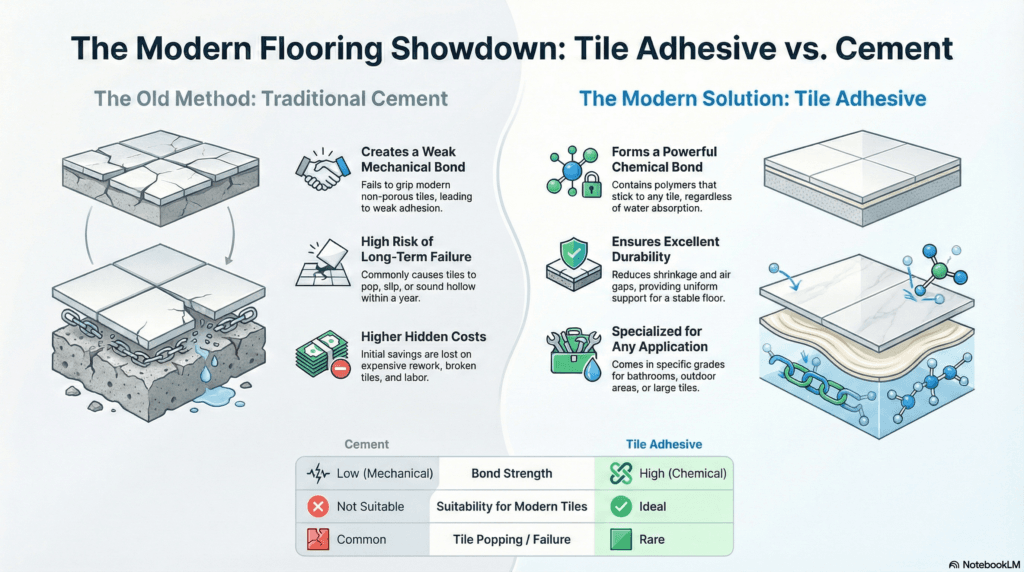
Modern tile adhesive surpasses traditional cement for fixing vitrified and porcelain tiles. While cement lacks grip on non-absorptive surfaces, adhesives use polymers to create a strong chemical bond. This prevents tile popping and ensures long-term durability.

“If cement is cheaper and people are still using it, why should we buy costly tile adhesive?”

This doubt is valid — and this article explains the real truth, without forcing you to buy anything.

What Is Tile Gum (Tile Adhesive)?

Tile gum, also called tile adhesive, is a factory-made fixing material specially designed to bond modern tiles to floors and walls.

Unlike cement, tile adhesive contains polymers and bonding agents that help tiles stick strongly, even when tiles do not absorb water.

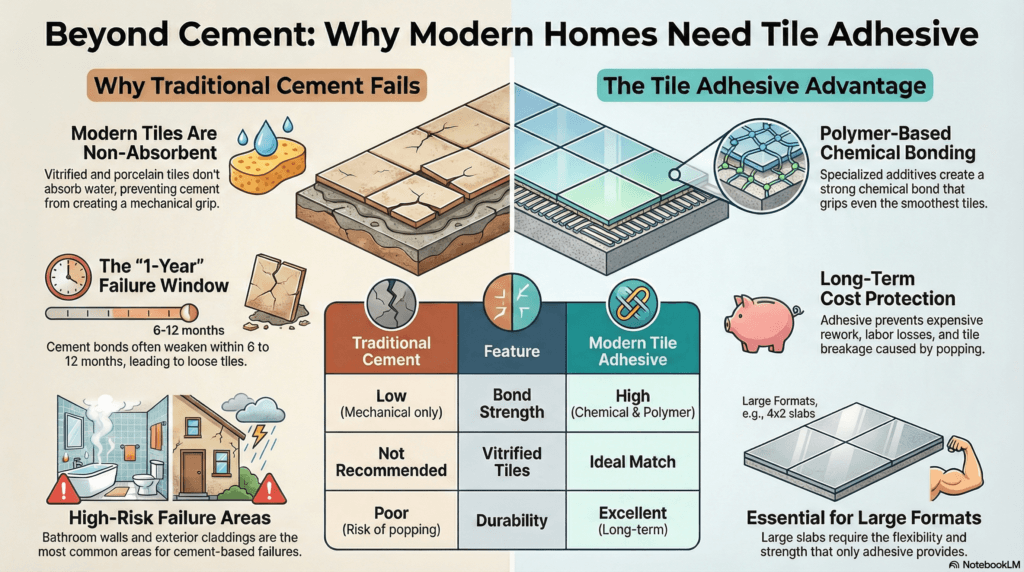
The reason cement worked in the past but fails today is the fundamental shift in tile porosity. Earlier homes primarily used ceramic tiles that absorbed water, allowing cement to form a functional bond; however, modern tiles like vitrified and porcelain are non-absorbent, meaning cement cannot "grip" them, leading to structural failure

Why Cement Worked Earlier — But Fails Today

Earlier, most homes used ceramic tiles.
These tiles absorbed water, so cement bonding worked reasonably well.

Today, most homes use:

  • Vitrified tiles

  • Porcelain tiles

  • Large format tiles (4×2, slabs)

👉 These tiles do NOT absorb water.

Because of this:

  • Cement cannot grip the tile properly

  • Bond strength becomes weak

  • Problems appear after 6 months to 1 year

This is the main reason tile popping happens.

Is Tile Adhesive Better Than Cement? (Short Answer: Yes)

Cement Problems Seen in Trivandrum Homes

From real site visits, common issues after 1 year:

  • Tiles making hollow sound

  • Tiles loosening or popping

  • Cladding tiles falling off

  • Bathroom wall tiles slipping

In many failed sites, we noticed:

  • Vitrified tiles fixed like ceramic tiles

  • Tiles not pressed properly

  • Wrong adhesive grade used

  • Tile adhesive mixed with cement (big mistake)

How Tile Adhesive Works (Simple Explanation)

Tile adhesive works through a three-part mechanism that makes it ideal for modern tiling applications. First, it creates a chemical bond with the tiles, ensuring they stick firmly to the surface. Second, it holds tiles evenly across the entire surface, preventing any unevenness or misalignment. Third, it reduces shrinkage after drying, which maintains the integrity of the installation over time. This combination results in several key benefits: a strong grip that keeps tiles securely in place, fewer air gaps that could compromise the installation, and long-lasting fixing that ensures durability. That’s why tile adhesive is considered the safer and more reliable choice for modern tiles.

Cement vs Tile Adhesive for Flooring

Choosing the right material for your flooring is critical because modern tiles have changed significantly from those used in the past. While cement was once the standard, tile adhesive (tile gum) is now the superior choice for modern homes due to its ability to create a strong chemical bond with non-porous surfaces

Cement vs Tile Adhesive – The Real Cost Truth Every Homeowner Should Know

Tile adhesive is not about spending more money.
It is about spending money in the right place.

Using the correct adhesive grade for the right area prevents tile failure, saves repair cost, and avoids future tension.
When tiles last longer, your home stays safe and problem-free.


Scroll to Top